Transporte gratuito a partir de 200€ Península y 250€ Islas Baleares
La Cave Gillet
21/03/2025

How to tell if a red wine is ready to drink or needs to age

How to tell if a red wine is ready to drink or needs to age
Wine making is an art. Among the great variety of wines that exist, red wine occupies a special place for its character, depth and tradition. Its history dates back to Antiquity, since the Egyptians already produced this drink, and over time the secret of its preparation was passed on to other civilizations that arose, such as the Greeks and the Romans.  Due to the effects that this drink produced on the people who consumed it, all these civilizations associated this drink with religious rituals and considered it a real symbol of status and refinement for the elites. With the arrival of Christianity, wine continued to have religious significance as it was introduced into the Sacrament of the Eucharist as a representation of the blood of Christ. Nowadays, red wine is an element that is often seen quite commonly in all types of celebrations: business dinners, meetings with friends, romantic dates, weddings or housewarmings.  Its main advantage lies not only in its excellent flavor, but also in the maturation process that is necessary to obtain it, which influences its structure, aroma and complexity. Knowing when a wine has reached its fullness is essential to be able to fully enjoy its tasting and aromatic properties. Therefore, in this article we are going to show you everything you need to know about wine aging and the different factors that determine whether a red is ready to drink or if it still needs more aging time.

Why is wine aged?

Aging is, without a doubt, a crucial phase in the evolution of a red wine. During this process, the wine is left to mature in new or used oak barrels, where it acquires greater aromatic and structural complexity. This period after fermentation makes it possible for unique nuances to develop, resulting from chemical reactions and physical and biological alterations that occur naturally over time. In general terms, we can say that the breeding process is divided into two main phases:
  • Oxidative aging: It is produced in oak barrels, where contact with oxygen and the transfer of wood compounds can enrich the wine, adding certain notes of leather, tobacco, smoke or nuts. At this stage, the tannins become concentrated, giving rise to more structured and more intense wines.
  • Reductive aging: This phase of the process occurs when the wine ages in bottle, with hardly any contact with oxygen. This type of aging allows to soften the tannins and better preserve the fruity and floral aromas, achieving a wine with more vivid colors, more balanced flavors and that provides a much silkier texture in mouth.
Depending on the wine aging time, we can obtain a drink with a different profile. Thus, we can distinguish between young, aged, reserve and grand reserve wines, which we are going to show you later in this article. 

Types of wine according to their aging
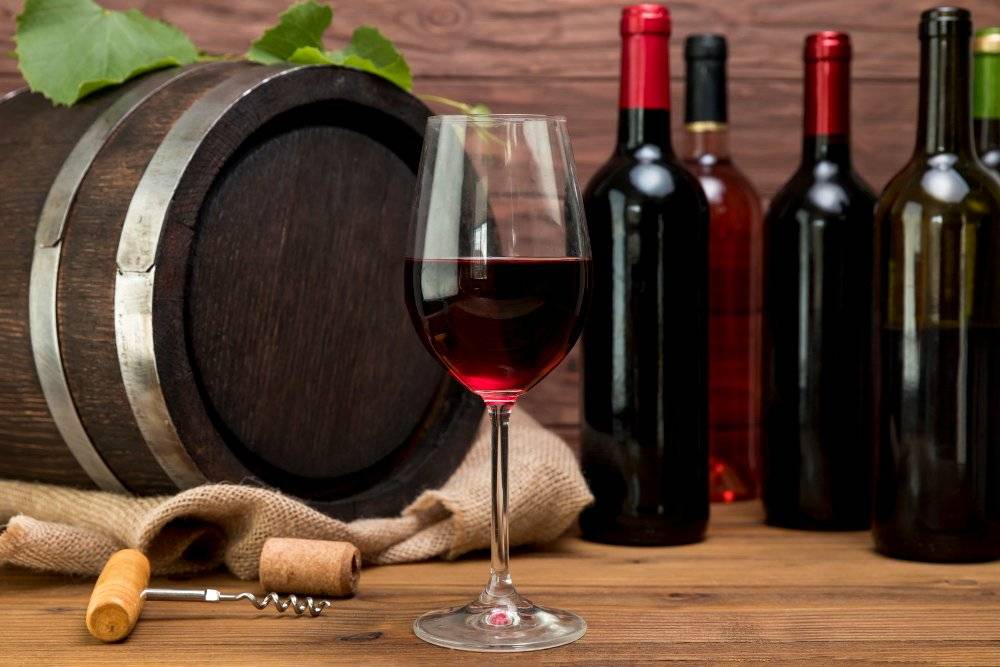
Once the fermentation is finished, the wine can be consumed directly or can be subjected to a period of maturation in wooden barrels or even in bottle. We can divide red wines depending on their aging as follows:
  • Young wines: This type of wine does not go through an aging process in barrels. They are fresh and fruity, with pronounced acidity and soft tannins. Ideal to consume in the warm months, at a recommended temperature that can range between 12°C and 14°C, depending on the bottle. 
  • Aged wines: These have a minimum maturation of 24 months, of which at least 6 must take place in barrels and the rest in bottles. They tend to have greater body and structure, with spicy and toasted notes from the wood. They are more elegant and balanced, with lower acidity and greater aromatic complexity. We recommend serving them between 14°C and 16°C.
  • Reserve wines: They must spend about 36 months in aging, with a minimum of 12 in barrels. They have ruby ​​tones and a great wealth of nuances, with aromas of spices and ripe fruits. They are powerful and sophisticated wines, which are ideal to accompany red meats or strong stews. We recommend consuming them between 16°C and 18°C.
  • Gran Reserva wines: They are the most exclusive, with a minimum of 60 months of aging, of which 18 must be in barrels. They stand out for their mahogany or dark garnet color, their great aromatic intensity and their long and persistent aftertaste. They are refined wines with great depth, which should be served at a temperature between 18°C and 20°C.
If you are looking for quality references, in our red wine catalog you will find one selection of the best brands of types of wine according to their aging time, with options to taste at the moment or even to keep in your cellar for a few more years.

But how do you know if a wine is ready to drink or needs to age?

Not all red wines improve over time. Some are designed to be enjoyed from the moment fermentation ends while others need to evolve to reach their aromatic and tasting complexity. The key to determining whether a wine is ready or whether it needs to be aged can depend on different factors:

The type of grape and the structure of the wine

Grapes with a high concentration of tannins and acidity, such as Cabernet Sauvignon, Nebbiolo or Tempranillo, usually produce wines with great potential for aging. On the other hand, some varieties, such as Gamay or Pinot Noir, can produce lighter wines that can be consumed in the same season without the need for aging in either barrels or bottles. 

Balance between tannins, acidity and fruit

If a young wine has very aggressive tannins, high acidity, astringency and fairly closed aromas, it is likely that it needs more time in the bottle to soften and develop other nuances. However, if it already offers good balance and expression complex aromatic, it can be a good time to taste this type of drink. 

Storage conditions

The aging of wine also depends on the light, temperature and humidity conditions in which it is stored. A wine stored in a dark, cool place with adequate humidity can evolve better than another that is exposed to a more unstable environment in this sense. 

Tasting test

The best way to know if a wine is ready to drink is to taste it. If the tannins are still very harsh or if the aromas are still too closed, it may need a few more weeks or months of aging. If, on the other hand, it already has good complexity and balance, the ideal time may have arrived to enjoy it. In short, we can say that the ideal aging time can vary depending on the type of wine and personal preferences. A young wine is enjoyed for its freshness and liveliness, while a Gran Reserva is valued for its depth and sophistication. The most important thing is to know the profile of each wine and know when to uncork it to enjoy it at its best. Regardless of whether you want to enjoy a wine to consume immediately or a bottle with aging potential, we have no doubt that, in the online catalog of our store, at La Cave Gillet, you will find the best wines to taste in all types of occasions and celebrations. 
Ask us