


Pressing and obtaining the must
The first step in the production of liquors, without a doubt, is obtaining the must, which is the liquid resulting from the extraction of sugars from the raw material. Depending on the type of liquor we are producing, the raw materials may vary. For example, Whiskey uses grains such as barley, while Vodka can be made from potatoes or with wheat and Tequila and Mezcal are obtained from the agave. For its part, to make Rum, the must is produced from sugar cane or molasses. However, a common characteristic in all of them is obtaining the must. The process begins with the pressing or grinding of these ingredients to release their natural sugars and obtain the must. In the case of fruits, such as grapes to make Cognac or the skin of the grape for Pomace, pressing is a crucial step to obtain the juice or must. This must contains the necessary sugars that, with fermentation, will become alcohol.Fermentation process
 As we have mentioned before, once the must is obtained, the next step is fermentation. In this process, yeasts are added to the must to start a chemical reaction that transforms the sugars into alcohol. This is an essential step in the production of liqueurs, since it allows us to obtain the base flavor, which will serve to give the final product a certain character. The duration and conditions of fermentation, such as temperature and what type of yeast we use, can vary considerably and can affect the flavor profile of the liquor that we obtain. For example, in the case of Whiskey production, fermentation usually lasts between 48 and 96 hours, while for Tequila it can last 7 to 12 days. The result of fermentation is a liquid with a low alcohol content that must be distilled to increase its alcohol content.
Distillation process
Distillation is, without a doubt, the heart of the liquor-making process, since it is where the “magic” that transforms the fermented liquid into a spirit occurs. But what is the distillation process like? In general terms, we can say that it is a method that serves to separate the drink we want to obtain from the impurities it contains. Therefore, it is used to separate the alcohol from the rest of the liquid that we have obtained after fermentation. This process is carried out in industrial or traditional stills industrial or traditional stills, which are generally made of copper. In these stills, the fermented liquid is heated, causing the more volatile components, such as alcohol, to evaporate first. These vapors are channeled through a condensation system, where they are cooled and return to a liquid state, precipitating into another container. Of course, after distillation, we obtain a drink with a higher alcohol content. This distillation can be repeated several times to obtain purer liquors.Maturation in barrels
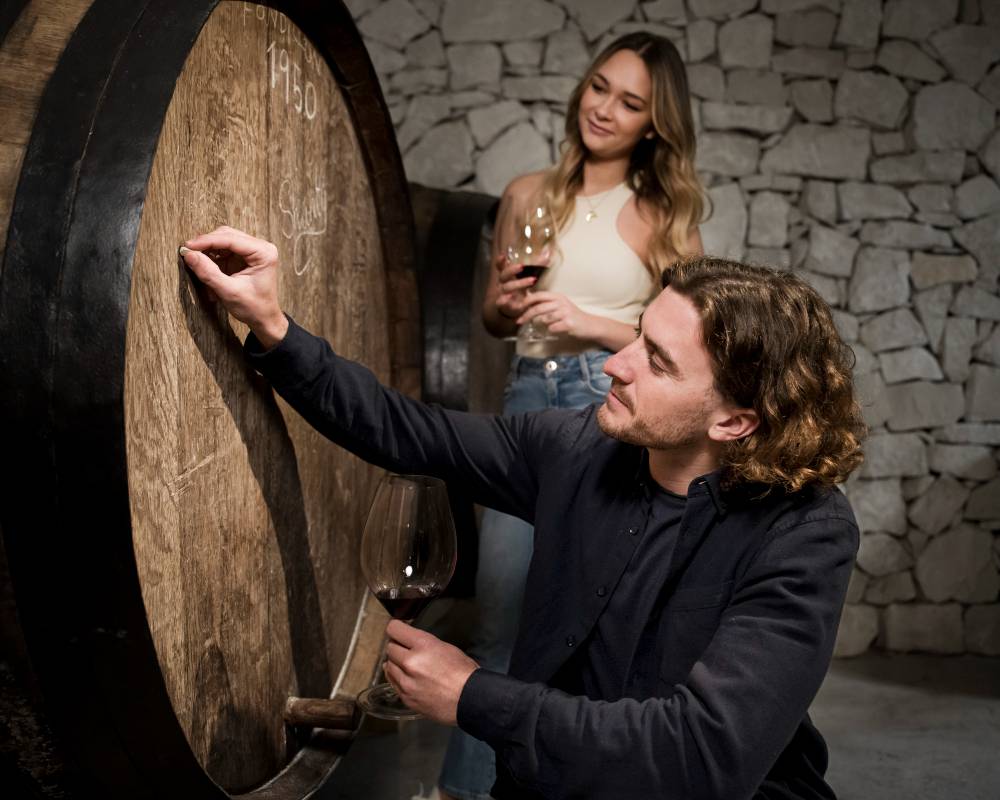 Once distilled, the liquor must be transferred to copper barrels to complete the maturation or aging that is required to achieve the necessary quality. Not all liquors go through this stage, but for those that do, such as Whiskey, Cognac and some types of Rum, maturation in barrels is crucial so that they end up developing their flavor and character.
Barrels barrels are usually made of oak wood, which adds unique woody flavors and aromas to the liquor as the days, weeks, months and even years go by, depending on the type of liquor and what the laws dictate. designation of origin that regulates its production. After the necessary time, this spirit can be bottled, although, on some occasions, its alcohol content can be adjusted by diluting it with water.
Once distilled, the liquor must be transferred to copper barrels to complete the maturation or aging that is required to achieve the necessary quality. Not all liquors go through this stage, but for those that do, such as Whiskey, Cognac and some types of Rum, maturation in barrels is crucial so that they end up developing their flavor and character.
Barrels barrels are usually made of oak wood, which adds unique woody flavors and aromas to the liquor as the days, weeks, months and even years go by, depending on the type of liquor and what the laws dictate. designation of origin that regulates its production. After the necessary time, this spirit can be bottled, although, on some occasions, its alcohol content can be adjusted by diluting it with water.