


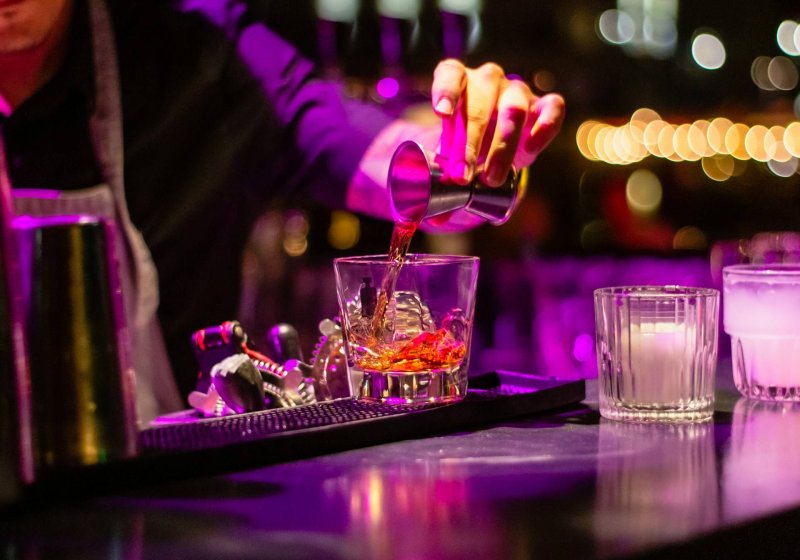
What are the main liquors that exist?
Among the best-known liquors we can mention tequila, mezcal, whiskey, rum, vodka, gin, brandy, cognac, as well as spirits, among others that you can find in our catalog of liquors. Tequila is a spirit drink native to Mexico, a variety of mezcal that is made from the distillation of blue agave, a plant that only grows in some Mexican states, such as Jalisco. Whiskey has multiple variants such as Scotch, Irish and bourbon, and is obtained from the distillation of cereals, such as barley, corn and rye. For its part, rum comes from the distillation of sugar cane while vodka is obtained from the fermentation and distillation of cereals, such as wheat, rye, barley, corn or potatoes. gin is another of the main types of liqueurs, it is characterized by its juniper berry flavor. It is obtained from different cereals, such as corn, barley or malt, juniper berries and aromatic herbs. Brandy and cognac are wine distillates. In fact, cognac is a specific type of brandy that is produced in and around the French city of Cognac. Finally, we can say that spirits are a wide variety of spirituous or high-alcohol beverages that are made from the distillation of wine or other fermentable products, such as fruits, cereals, sugar cane, beets, among others. All the liquors that we have mentioned have in common that, to obtain them, we have to subject certain products to a fermentation process and, subsequently, distillation.Distillation process to obtain liquors
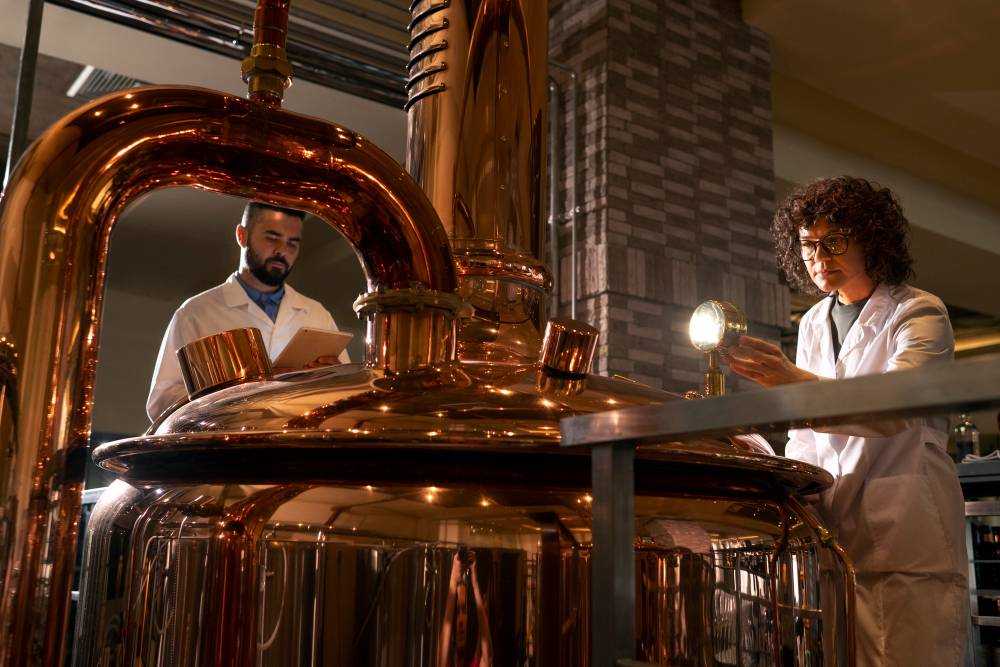 The production of liqueurs is an art that combines modern techniques with the most traditional ones. Here we must highlight that the distillation process was invented by alchemists in the Middle Ages and is currently carried out in large industrial plants. The distillation process is essential for obtaining high quality liquors and can be divided into several stages.
Liqueur production process: fermentation
The first step in the process of making liqueurs is fermentation, where the sugars of cereals, fruits, agave, etc., are converted into alcohol through the addition and action of yeasts. As we have mentioned Above, depending on the type of liquor or the origin of the sugar, different types of liquor can be obtained, which can be extra dry, dry, sweet, fine and creamy, depending on the sugar content. The more sugar they contain, the creamier they are. For example, blue agave is used to obtain tequila, cereals are used to make whiskey, sugar cane is used to produce rum, potatoes and other cereals are used to obtain vodka. Fermentation can last from a few days to several weeks, producing an alcoholic base with impurities. To eliminate these impurities, distillation is used in the liquor production process.Preparation of liqueurs: distillation
Once fermentation has produced an alcoholic beverage with impurities, the next step, to eliminate these impurities, is distillation. To do this, the drink is introduced into a copper still and heated to separate the alcohol and other volatile compounds and aromatics of water through an evaporation process. Remember that alcohol is more volatile than water, so in this process it condenses and is collected in another container in a purer liquid, thus obtaining a purer liquor. However, you must keep in mind that some of the water also evaporates with the alcohol, so, normally, the result is subjected to another distillate. In the first distillation, alcohol and other volatile compounds are separated from water and other non-volatile substances. Thanks to the second distillation we obtain a much purer and more refined liquid, eliminating any trace of water and other impurities. Although twice is usually enough, sometimes the liquid is subjected to a third distillation to obtain a top quality liquor.The production of liqueurs: aging period
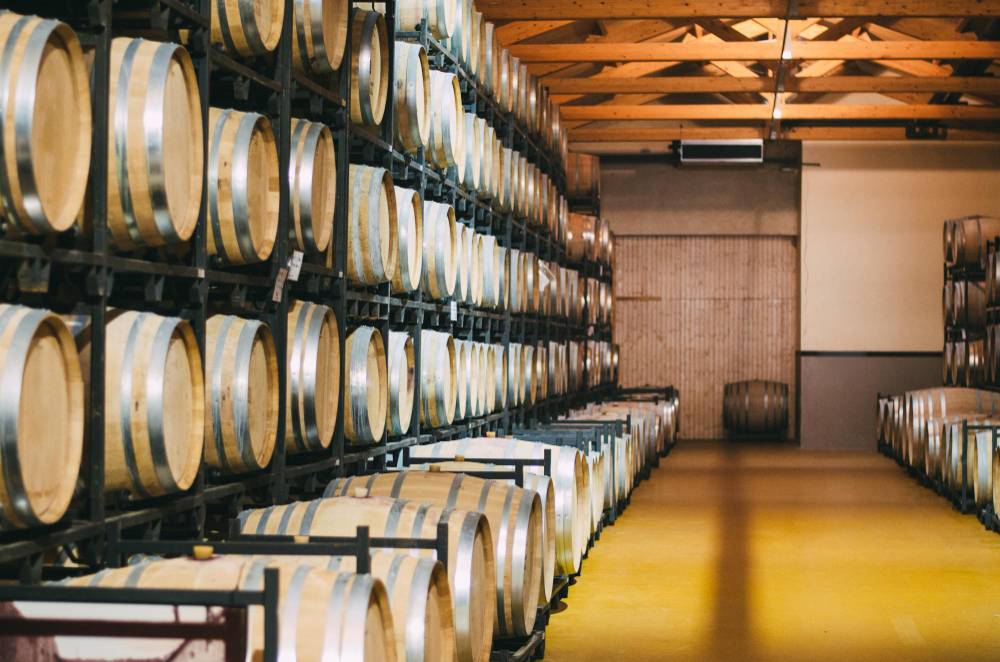 After distillation, in the process of making liqueurs, we can say that not all spirits require a period of maturation or aging, but many, such as whisky, the brandy and some types of rum, must be allowed to rest for a while in wooden barrels. This aging allows the liquor to acquire greater richness or complexity of flavors. The most coveted liqueurs are those that have been undergoing a maturation process for years.
As with the maturation of wine, the wood of the barrels also provides tannins and other compounds that add greater complexity to the flavor of the liqueurs. The duration of maturation can last a few months, but it can also last between one and three years, depending on the type of liquor and the flavor we want to obtain.
After distillation, in the process of making liqueurs, we can say that not all spirits require a period of maturation or aging, but many, such as whisky, the brandy and some types of rum, must be allowed to rest for a while in wooden barrels. This aging allows the liquor to acquire greater richness or complexity of flavors. The most coveted liqueurs are those that have been undergoing a maturation process for years.
As with the maturation of wine, the wood of the barrels also provides tannins and other compounds that add greater complexity to the flavor of the liqueurs. The duration of maturation can last a few months, but it can also last between one and three years, depending on the type of liquor and the flavor we want to obtain.